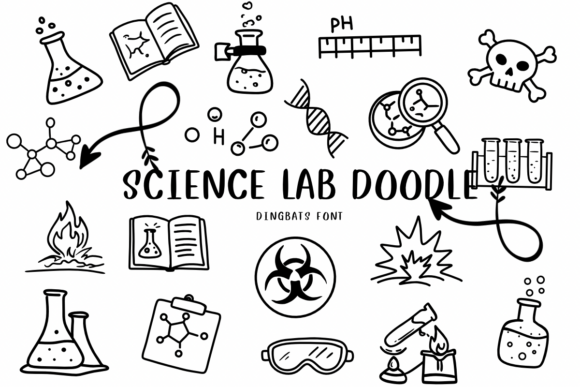
Science Lab Doodle: Unleash Creative Visual Storytelling
In the world of graphic design, finding a unique visual language that captures attention while conveying a specific theme is a constant pursuit. Enter Science Lab Doodle, a distinctive dingbats font brimming with sketch-style icons that instantly evoke curiosity, experimentation, and a touch of whimsical intelligence. This isn't just another set of symbols; it's a versatile creative asset designed to inject personality and thematic depth into a wide array of projects, from elegant wedding invitations to bold branding initiatives.
At its core, Science Lab Doodle is a specialized typeface where each character corresponds to a hand-drawn illustration of common laboratory equipment—think beakers, test tubes, microscopes, molecules, and scientific diagrams. The sketch-style aesthetic lends an authentic, approachable feel, moving away from sterile, overly technical imagery. This makes it exceptionally useful for designers aiming to communicate themes of innovation, education, health, or DIY creativity without resorting to generic clipart. Its value lies in its ability to create instant visual recognition and emotional resonance, a cornerstone of effective brand identity and visual communication.
Practical Applications for Modern Design
The utility of a thematic dingbat font like Science Lab Doodle extends across numerous design disciplines, offering solutions for both digital and print media. Its consistent visual style ensures coherence, while its playful nature can significantly boost user engagement.
Enhancing Branding and Marketing Collateral
For businesses in education, biotechnology, artisanal crafts, or even quirky cafes, integrating Science Lab Doodle into logo design or brand collateral can establish a memorable identity. Imagine a logo incorporating a custom beaker icon, or business cards adorned with a subtle molecular border. These elements contribute to a cohesive visual hierarchy and tell a brand story at a glance. Marketing materials such as brochures, flyers, and social media graphics gain a distinctive edge, helping campaigns stand out in crowded digital marketing spaces.
Elevating Digital and Print Experiences
In web design and UI design, these icons can serve as engaging bullet points, section dividers, or illustrative elements within an interface, improving the user experience by making content more scannable and delightful. For editorial design and packaging design, the doodles add a layer of texture and interest, guiding the reader's eye and reinforcing product themes—perfect for gourmet food packaging, book covers, or magazine layouts. Furthermore, they are invaluable for creating unique merchandise, digital products, presentation slides, and advertising campaigns that require a touch of scientific charm.
Integrating Thematic Elements Effectively
Successfully incorporating a specialized asset like Science Lab Doodle into your design workflow requires thoughtful consideration. The goal is to enhance, not overwhelm, your visual design.
- Consistency is Key: Use the doodles as part of a broader system. Pair them with a complementary color palette and typography that aligns with your brand's voice—whether that's clean and modern or rustic and handmade.
- Prioritize Readability: While decorative, ensure the icons support rather than hinder message clarity. Use them as accents in headers, footers, or sidebars, and maintain clear, legible body text.
- Scale with Purpose: Test icons at various sizes to ensure they remain crisp and recognizable, whether used as a small favicon or a large hero image element. Scalability is crucial for professional presentation across devices and print formats.
- Audience Alignment: Consider your target audience's expectations. The playful sketch style suits creative projects and consumer-facing brands exceptionally well, while a more corporate scientific entity might use them sparingly for a specific campaign.
Thoughtful design choices are what separate good projects from great ones. Assets like Science Lab Doodle provide more than just decoration; they offer a shorthand for complex ideas, foster emotional connections, and elevate the overall aesthetic of your work. By selecting creative resources that are both visually striking and thematically coherent, designers and creators can streamline their workflow, ensure brand consistency, and ultimately produce communications that are not only beautiful but also profoundly effective. In the pursuit of quality visual design, the right tools can transform a simple concept into a compelling visual narrative.